

Three quotes, three numbers, and no explanation
A patient who has had three consultations for eyelid surgery in Sydney is often holding three quotes that do not match. Not by a few hundred dollars. Sometimes by several thousand. The immediate worry, usually arriving somewhere around 2am, runs in both directions at once: either the expensive quote is opportunistic, or the cheap one is cutting something that matters.
Most of the time the difference comes down to what is actually being quoted: which operation, performed where, with who else in the room. Those things are knowable. They are also rarely spelled out at consultation, which is why the numbers look arbitrary once they are laid out side by side at the kitchen table.
This article sets out what actually moves the number, without quoting a price. It should let a patient read their own three quotes and work out whether they are looking at three prices for the same operation, or three prices for three different operations that happen to share a name.
Key takeaways
- A quote is a description of a plan, not a price for a product. Two quotes for "eyelid surgery" may describe genuinely different operations.
- The four main cost drivers are the facility, the anaesthetic arrangement, the technique the anatomy requires, and whether the operation is a first procedure or a revision.
- A lower number is not inherently worse. An unitemised number is the actual problem, because it cannot be compared to anything.
- Medicare and private health insurance rebates do not apply to treatment at this practice, so quotes reflect the full cost upfront.
- The useful question at consultation is not "why is this more than the other clinic" but "what is included in this figure, line by line".
What a quote is actually pricing
A cosmetic surgery quote bundles several separate costs that are often invisible to the patient reading the total:
| Component | What it covers | Why it varies | |---|---|---| | Practitioner fee | Assessment, operative time, post-operative care | Operating time required, complexity of the case | | Facility fee | The room the operation happens in | Licensed day hospital, accredited procedure room, or office-based setting | | Anaesthetic fee | Sedation or general anaesthesia | Whether an anaesthetist is present and for how long | | Follow-up | Post-operative review appointments | How many are included before additional fees apply |
When two quotes differ, at least one of these four is usually different. Working out which one is the first job, and it takes an itemised quote to do it.
The facility is often the biggest single difference
An upper blepharoplasty under local anaesthetic can be performed in an appropriately equipped procedure room. A more involved operation, or one requiring sedation, generally needs a licensed day hospital with the staffing, equipment, and accreditation that goes with it.
Those settings do not cost the same to run. A licensed day facility carries theatre staff, accreditation requirements, recovery-bay nursing, and equipment maintenance. That cost appears in the quote as a facility fee, and it is frequently the largest single line item separating two otherwise similar quotes.
This is not a case of one setting being correct and the other inadequate. It is a clinical decision about what a given operation and a given patient require. A patient with a straightforward upper lid and no relevant medical history may be entirely appropriate for a procedure-room operation. A patient having lower lid work under sedation is a different proposition. The point is that if one quote assumes a day hospital and another assumes a procedure room, the two numbers were never comparable to begin with.
The anaesthetic arrangement
Local anaesthetic, local with sedation, and general anaesthesia are three different arrangements with three different cost structures. Sedation and general anaesthesia require an anaesthetist, whose fee is separate and is generally billed by time.
Patients sometimes assume the anaesthetic choice is a comfort preference. It is partly that, but it is also a clinical judgement based on the operation planned, its expected duration, the patient's medical history, and how much of the surgical field needs to remain still. A longer or more involved operation is harder to perform well under local anaesthetic alone.
A quote that includes an anaesthetist and one that does not will differ substantially. Neither is wrong. They are pricing different plans.
Technique, and why the eyelids themselves change the number
The phrase "eyelid lift" covers a range of operations. What a given patient needs depends on their anatomy, not on which procedure name they arrived with.
Some of the assessments that change the operative plan:
- Upper lid and lower lid are separate operations. They can be combined, which lengthens the procedure and changes the anaesthetic requirement.
- Excess skin and prominent fat pads are different problems. Addressing one, the other, or both calls for different techniques and different operating time.
- A low brow can produce the appearance of upper lid heaviness. Operating on the eyelid alone, when the brow is what is causing the appearance, does not address what the patient came in about.
- Drooping caused by the levator mechanism rather than by excess skin is a different problem needing a different repair. The distinction is set out in the comparison of blepharoplasty and ptosis repair.
- The tone and position of the lower lid margin is assessed before operating, because a lower lid with poor support behaves differently afterwards.
Two patients can walk in with the same complaint and leave with genuinely different operative plans. This is the most common reason two quotes for "the same" procedure are not, in fact, for the same procedure.
First procedure or revision
Revision work is quoted higher for technical reasons rather than commercial ones.
Tissue that has already been operated on contains scar tissue, which is stiffer and less predictable to work through. The anatomy has been altered, so the landmarks a practitioner would normally work to may have moved. There is usually less tissue available, which narrows the margin for adjustment.
The practical result is that revision operations tend to take longer, require more detailed pre-operative assessment, and involve more planning around what the previous operation did. A higher quote for revision work reflects that additional time and complexity.
Where Medicare and private health insurance sit
Medicare and private health insurance rebates do not apply to treatment at this practice. The quoted figure is the full cost, with nothing to be claimed back afterwards.
This matters specifically when comparing quotes. A figure presented elsewhere as a net or out-of-pocket cost, calculated after an anticipated rebate, is not directly comparable to a full-cost quote. Whether a rebate is ultimately paid depends on assessment criteria applied by Medicare or an insurer, and eligibility is not a decision made by the practice performing the operation.
When comparing quotes, the question worth asking of each is whether the number shown is the total payable, or a figure that assumes something will come back later.
Reading your own three quotes
A practical exercise for a patient sitting with several quotes:
- Separate each quote into its four parts. Practitioner fee, facility fee, anaesthetic fee, follow-up. If a quote will not break down, that is the first thing to ask about.
- Check what operation each one describes. Upper, lower, or both. Skin, fat, or both. Local, sedation, or general anaesthetic.
- Check the setting. Day hospital, accredited procedure room, or office-based.
- Check what follow-up is included, and what happens financially if a revision is needed later.
- Then compare. Once the four parts are visible on each quote, the differences usually explain themselves.
Most of the time this exercise turns three unexplained numbers into three explicable ones. Occasionally it surfaces a genuine outlier, and that is worth asking about directly.
What a large gap usually means
A significant price gap between two Sydney practices usually means the quotes describe different operations, or the same operation in different settings. Overcharging is a less common explanation than most patients assume when they first see the spread.
The gap becomes worth questioning when both quotes have been itemised, both describe the same operation in the same setting with the same anaesthetic arrangement, and a large difference remains. At that point the question can be put directly to either practice, and a reasonable answer should be available.
Equally, a quote that is markedly lower than others deserves the same scrutiny in the opposite direction: what is included, where is the operation performed, who administers the anaesthetic, and what happens if a revision is needed.
Surgery carries risk, and cost is not the main decision
Eyelid surgery is surgery. It carries risk, including bleeding, infection, asymmetry, changes in lid position, dry eye symptoms, and the possibility that a further operation is needed. Those risks are unaffected by what the operation costs.
Australian regulation requires two consultations before a cosmetic surgery operation is booked, and a minimum seven-day cooling-off period after the second one. The gap between the two consultations is there so the decision is not made inside a single appointment. It can also be used to go back through the quote properly, which most patients do not think to do at the time.
Price is a poor filter to choose a practitioner on, and it is a worse one when the quotes have not been itemised, because the comparison is not a real comparison. A more workable order is to decide who to be assessed by, understand the plan they propose, and look at the cost against that plan.
Next steps
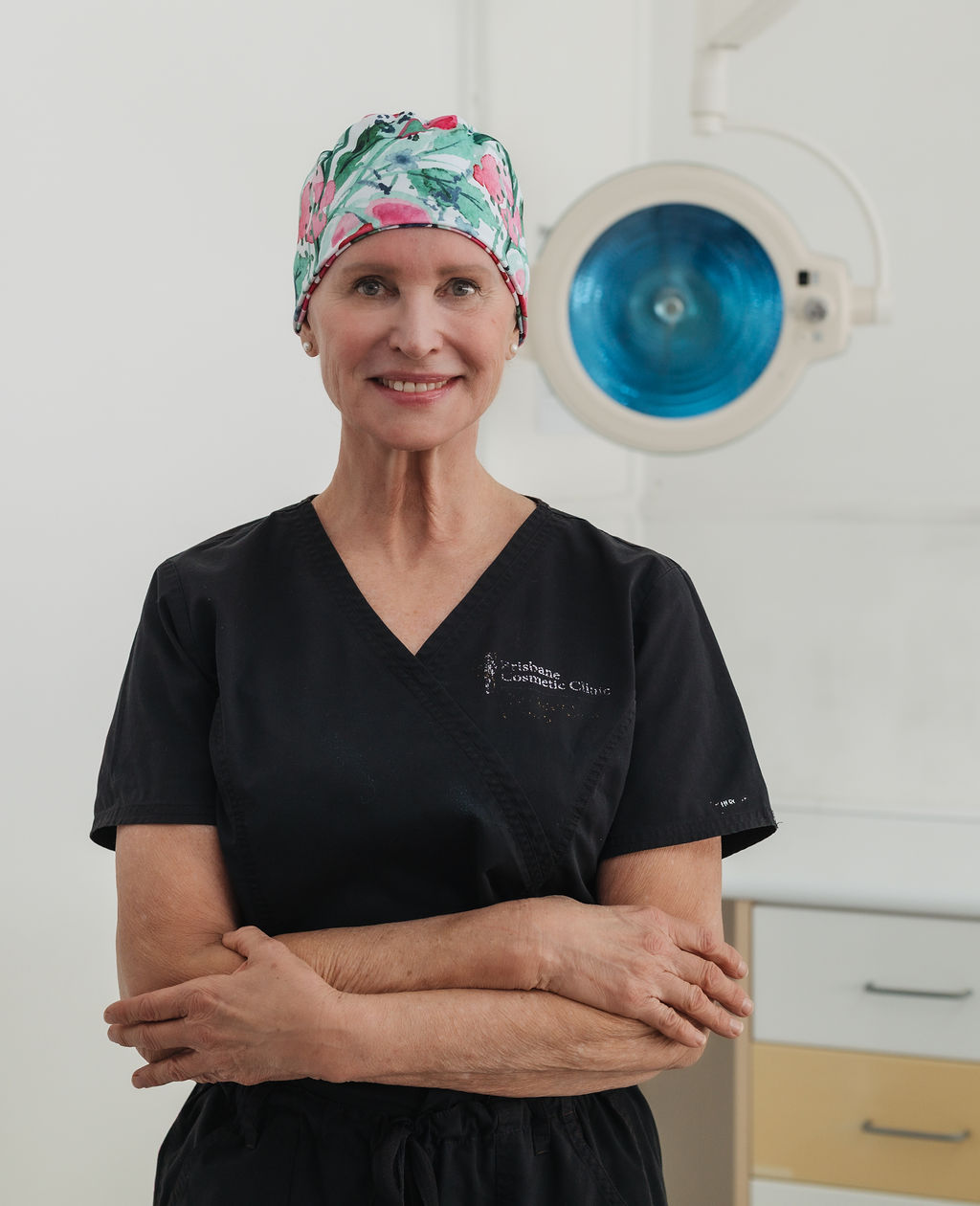
Dr Georgina Konrat performs upper blepharoplasty. Lower blepharoplasty is not performed at this practice. For the fee structure and what an upper eyelid surgery quote at this practice includes, see blepharoplasty cost in Sydney. For the assessment itself and what happens across the two required consultations, see what to expect at a cosmetic consultation and the overview of eyelid surgery.
Patients who would like their own eyelids assessed and an itemised quote prepared can book a consultation.
Written by Dr Georgina Konrat, MBBS, FACCSM. Cosmetic doctor, AHPRA registration MED0001407863. Practising since 1997. This article is general information and is not a substitute for an individual assessment. It does not promise or imply any particular outcome.