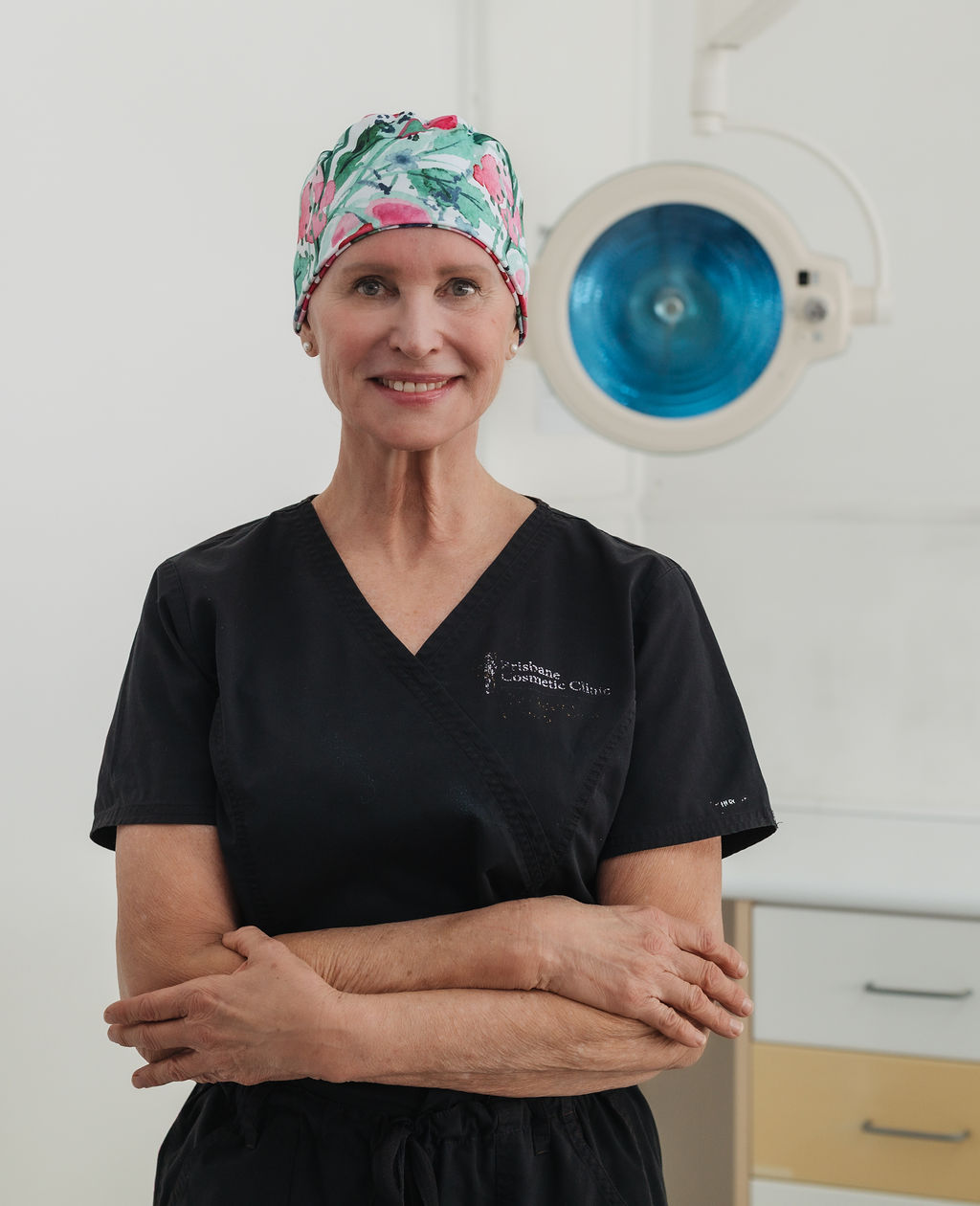
Asian eye surgery (the clinical term is asian blepharoplasty) is an upper-eyelid procedure that creates or refines a supratarsal crease in eyelids that have a low, partial, or absent crease, sometimes described as "double eyelid surgery". It is performed at Dr Georgina Konrat's Bondi Junction practice in Sydney.
Patients researching asian eye surgery in Sydney often come across several terms for the same general operation: "asian eye surgery", "double eyelid surgery" and the clinical term "asian blepharoplasty". This page covers who is typically assessed as suitable, the range of crease shapes achievable, the anatomy behind the procedure, how the planning differs from standard Western upper blepharoplasty, and what the consultation pathway looks like. For the difference between the search terms themselves, see asian eye surgery vs asian blepharoplasty.
The Underlying Anatomy
The reason a separate term exists is anatomical, not aesthetic. The upper eyelid has a structure called the supratarsal crease — the fold that appears when the eye is open. In Western anatomy, the levator aponeurosis (the connective tissue that lifts the lid) attaches to the skin at a relatively high point, producing a defined crease.
In a proportion of East Asian and Southeast Asian eyelids, the attachment is lower or absent, the pre-aponeurotic fat pad is more prominent, and an epicanthal fold may be present at the inner corner of the eye. The result can be an upper eyelid without a defined crease (a "single eyelid"), a shallow or partial crease, an asymmetric crease between the two eyes, or a crease that sits very low. None of these are problems in any clinical sense — they are anatomical variations.
Asian blepharoplasty is the name commonly used when the operative goal is to create or refine the upper eyelid crease rather than remove redundant skin from a crease that already exists.
Who Is Assessed as Suitable
Suitability for asian eye surgery is decided individually, across two consultations, rather than assumed from a single description. The assessment generally covers a monolid with no visible crease, an existing crease that is shallow, uneven between the two eyes, or sits lower than the patient would prefer, and upper-lid skin that already shows some looseness, a pattern seen more often as patients move into their forties and fifties, where crease definition and mild skin excess are addressed together.
General health factors relevant to any eyelid surgery apply equally here: no uncontrolled bleeding disorders, realistic expectations about what a crease procedure can and cannot change, and being at least 18 years old. Dr Konrat also checks eyelid and eyebrow position, skin elasticity, and whether any degree of ptosis (lid drooping) is contributing to the appearance, since that changes the plan. Patients who are mainly seeking a specific celebrity look, or who have not yet considered non-surgical options like eyelid tape, are encouraged to explore those questions further at consultation rather than book straight away. Not every patient who enquires is offered surgery, and that judgement is part of the assessment, not a formality.
Crease-Shape Options
Where a crease is being created rather than simply refined, the shape of that crease is a separate decision from whether to have surgery at all. Three broad shapes are generally discussed:
Parallel crease
A parallel crease runs an even distance above the lash line for its full length, from the inner to the outer corner of the eye. It is a common preference for patients who want a clearly defined, symmetrical fold along the whole eyelid.
Tapered (nasally tapered) crease
A tapered crease sits close to the lash line near the inner corner and gradually widens toward the outer corner. This shape works with an epicanthal fold rather than against it, and is often chosen by patients who want a natural-looking result that does not draw the eye outward.
Partial (hidden) crease
A partial or hidden crease is only visible in the outer portion of the eyelid and disappears into the fold near the inner corner. This is a more subtle result, suited to patients who want some crease definition without a fully open, continuous fold.
Which shape is achievable depends on individual anatomy: the height of the existing fold attachment, the amount of pre-aponeurotic fat, and whether an epicanthal fold is present at the inner corner. Dr Konrat measures and discusses these factors at consultation so the planned crease shape reflects what your anatomy will actually support, not a photograph brought in from elsewhere.
What the Procedure Aims to Do
The aim is to create a defined supratarsal crease at a chosen height and shape, fitting the rest of the patient's features. In practice, this is done by attaching the upper eyelid skin to the deeper structures (the levator aponeurosis or the tarsal plate) at the planned crease line. When the eye opens, the skin folds along that fixed line — that is what creates the visible crease.
Some patients also have skin or fat that benefits from being addressed at the same time, particularly older patients who have developed both an indistinct crease and excess upper eyelid skin. In those cases the procedure incorporates elements of both Asian and standard blepharoplasty planning.
Technique Families
Incisional
A continuous skin incision is made along the planned crease line. This allows controlled removal of skin or fat where indicated, direct fixation of the crease, and a more permanent result. The trade-off is a more visible incision line during early healing — although the scar settles into the new crease and is generally well hidden once healed.
Non-incisional (suture)
Small entry points are made along the planned crease line. Permanent sutures pass between the skin and the deeper tissue at the chosen height, producing a crease without a continuous skin incision. The approach has less surface scarring and a faster recovery profile, but the crease is generally less permanent than an incisional result — the suture loops can loosen over time in some patients, and the approach does not allow for skin or fat removal.
Partial incision
A middle-ground approach using two or three short incisions along the crease line. Allows some debulking and direct fixation while keeping less surface scarring than a continuous incision. Suitability depends on the amount of skin and fat present and the patient's preferences.
Technique selection is decided at consultation based on the patient's anatomy, the goal crease height and shape, and other practical factors like whether skin or fat removal is indicated. There is no single "best" technique — different patients suit different approaches, and Dr Konrat will explain which would suit your specific case before any decision is made.
Non-Surgical Alternatives: Tape and Glue
Adhesive eyelid tape and eyelid glue are non-surgical ways to hold a temporary crease in place for a day. They create the appearance of a crease without surgery, wash off, and leave no permanent change. Some people use them to preview whether a defined crease suits them before deciding on a procedure. They are not a substitute for surgery: the effect lasts only while worn, repeated daily application can irritate the thin eyelid skin, and the crease height achieved with tape does not predict a surgical result. Dr Konrat can discuss where a temporary option ends and where a surgical crease begins during consultation.
Epicanthoplasty
An epicanthal fold is a fold of skin covering the inner corner of the eye, common in Asian eyelid anatomy. Epicanthoplasty is a separate procedure that adjusts this inner-corner fold, sometimes considered alongside crease surgery to change how much of the inner eye is shown. It is a distinct decision from creating an upper-lid crease, carries its own scarring and healing considerations at the inner corner, and is not required for every crease procedure. Whether it is appropriate is assessed individually at consultation.
Subtle Ptosis Behind an Asian Upper Lid
In some people, a degree of upper-eyelid drooping (ptosis) — where the lid margin sits lower than expected and the levator muscle is weaker — can be partly masked by the fuller Asian upper lid. If present and not identified, a crease procedure alone may not produce the intended opening of the eye. Part of the consultation assessment is checking lid height and muscle function so that any underlying ptosis is recognised and factored into the plan, rather than discovered afterwards.
What the Procedure Does Not Do
Asian blepharoplasty does not change the colour of the iris, the shape of the eye opening (the palpebral fissure), or the underlying ethnicity-defining bone structure of the face. It does not address epicanthal folds — that is a separate procedure called epicanthoplasty which Dr Konrat does not currently perform. It does not address dark circles under the eyes or crow's feet, which are skin-quality and muscle-movement issues respectively.
It also does not guarantee a specific celebrity lookalike result. Photo references can help the consultation conversation about crease height and shape preferences, but the final result depends on the patient's own underlying anatomy. AHPRA rules prohibit outcome promises in cosmetic advertising and Dr Konrat's practice follows those rules in both advertising and consultation.
Recovery and Realistic Expectations
Most patients take 7 to 10 days off work, more if their work is customer-facing. Bruising and swelling are most noticeable in the first 48 to 72 hours and settle gradually over two to three weeks. Strenuous exercise is avoided for two to three weeks. Crease definition often appears higher and more defined than the final result for the first several months — the final crease settles by three to six months as deep tissue swelling resolves.
Asymmetry between the two eyes during healing is common and not the same as final asymmetry. Final symmetry is assessed several months post-procedure, and revision is discussed only after the result has had time to settle. Detailed written recovery instructions and follow-up appointments at the Bondi Junction practice are part of the standard pathway.
Risks Specific to Eyelid Surgery
All surgery carries risks. Risks specific to Asian blepharoplasty include asymmetric crease height, partial loss of crease definition over time (particularly with non-incisional techniques), unfavourable scarring, dry eye in the early healing phase, altered sensation, difficulty with full eye closure during the first week, and the possibility of revision surgery. Risks specific to any eye-area surgery — bleeding behind the eye, vision changes — are very uncommon but recognised. All of these are discussed in detail during the two required consultations, and written information is provided before informed consent. After informed consent, a minimum 7-day cooling-off period applies before surgery can be booked or a deposit taken.
The Consultation Pathway in Sydney
Asian blepharoplasty in Australia follows the same regulated cosmetic surgery pathway as any other cosmetic procedure:
- A GP referral is required before the substantive consultation and may be brought or supplied at the appointment.
- Two pre-operative consultations are required, including at least one in person with Dr Konrat.
- After informed consent, a minimum 7-day cooling-off period applies before surgery can be booked or a deposit taken.
- Patient must be 18 or over.
- Written quote provided after the first consultation, covering practitioner, anaesthesia, and facility fees.
Dr Konrat's practice is at Suite 402, Level 4, 59-75 Grafton Street, Bondi Junction NSW 2022. Check current public transport and parking information before travelling. The practice has an all-female clinical team. For full procedure information including recovery, risks, and anaesthesia options, see the main eyelid surgery page. For fees, see blepharoplasty cost Sydney.