
Blepharoplasty Sydney
Eyelid Surgery with Dr Konrat
Dr Georgina Konrat performs upper blepharoplasty. Lower blepharoplasty is not performed at this practice. Dr Konrat (MBBS, FACCSM) sees patients at her Bondi Junction practice, where surgery is planned after assessment of your anatomy, concerns, medical history and risks.
Key Facts
Blepharoplasty is the surgical name for eyelid surgery. Upper blepharoplasty removes excess upper eyelid skin, and where indicated a small amount of fat or muscle. It can address heavy or hooded upper lids and looking tired when you are not. Dr Georgina Konrat performs upper blepharoplasty. Lower blepharoplasty is not performed at this practice. Consultations are at her Bondi Junction practice in Sydney.
Procedure Duration
Varies by plan
Recovery
2–4 Weeks
Anaesthesia
Simple Sedation or General
Written by Dr Georgina Konrat (MBBS, FACCSM) — Last updated May 2026. AHPRA Registration: MED0001407863. ORCID: 0009-0002-9581-1131.
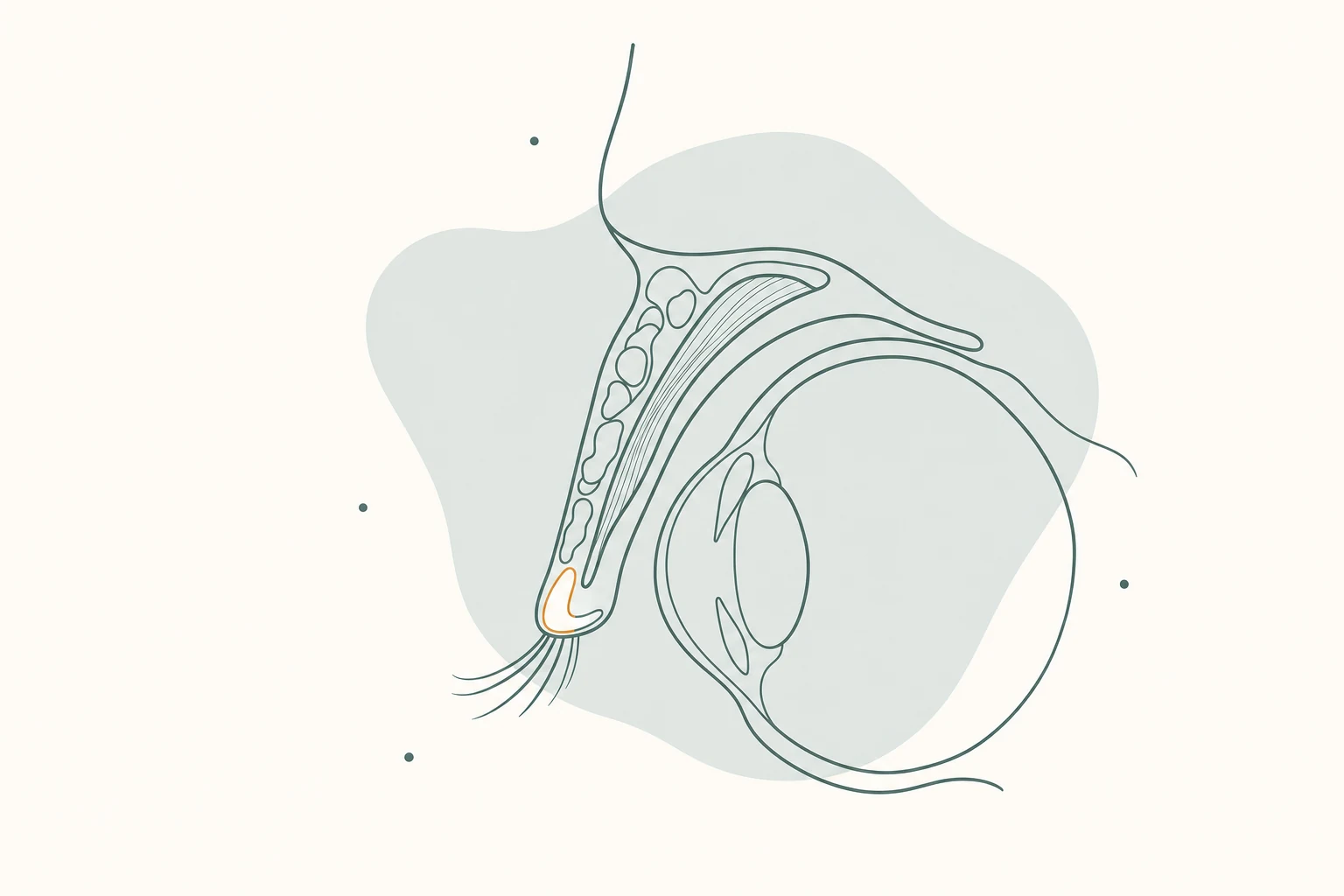 Upper eyelidEyelashesLid marginEye surface
Eyelid Surgery, Planned Around
Your Anatomy
Blepharoplasty is the medical name for eyelid surgery. Upper blepharoplasty may address skin, fat or muscle in the upper eyelids, depending on the individual surgical plan. Incisions are generally planned within the natural eyelid crease, but scars remain and their visibility varies.
People consider blepharoplasty for two reasons. Some are concerned about a heavy, hooded, or tired appearance that has developed over the past five or ten years. Others have noticed that the eyelid skin is starting to affect their peripheral vision, especially when reading or driving at night. The surgical plan is different in each case and is discussed at the first of the two consultations Dr Konrat sees every patient for before booking.
Blepharoplasty does not lift sagging brows, remove crow's feet, or change dark circles under the eyes. Those are caused by other tissues that sit outside the eyelid itself. Dr Konrat explains at consultation what blepharoplasty can and can't change, so you can decide on what the procedure actually does rather than what you might be hoping it does.
Gallery
View the Blepharoplasty (Eyelid Surgery) gallery
The gallery contains clinical before and after photographs intended for persons aged 18 years and over.
Further Reading
Related guides for Blepharoplasty (Eyelid Surgery)
Read more about recovery, costs, consultation planning, and procedure-specific considerations relevant to this page.
Risks & Complications
All surgical procedures carry risks. Potential risks and complications of Blepharoplasty (Eyelid Surgery) are outlined below and will also be discussed in detail during consultation.
For broader information about surgical risk, visit the General Risks and Complications page.
Notes from Practice
“Patients arrive at blepharoplasty consultations with one of two presenting issues. The first group describe a heavy or tired appearance that has developed over the past five to ten years, often pointing it out in photographs taken at family events. The second group raise a functional issue first, usually that the upper eyelid skin is starting to brush the lashes or affect peripheral vision when reading or driving at night. The surgical plan differs in each case. At the first of the two required consultations I assess the eyelid skin, the position of the brow, and whether there is true fat herniation or just laxity. That assessment is what guides the surgical plan for the upper eyelid. I explain on the day what blepharoplasty can change and what sits outside the operation.”
— Dr Georgina Konrat (MBBS, FACCSM), AHPRA MED0001407863
Reasons Patients Consider
Blepharoplasty (Eyelid Surgery)
Cosmetic Changes
Excess skin and fat around the eyes may create a tired or heavy appearance.
Functional Reasons
Excess skin may obstruct peripheral vision or make eyelids feel heavy.
Age-Related Changes
People aged 30 and above often experience eyelid laxity, but in some cases it occurs earlier.
Good General Health
Suitability depends on eye health, general health, medical history, medicines, smoking status and findings at consultation.
Upper Eyelid
Blepharoplasty
Upper Eyelid Surgery
Upper eyelid surgery removes excess skin, fat, and or muscle from the upper lids. Incisions are placed within the natural eyelid crease so scars are usually concealed.
What About the Lower Eyelids?
Lower blepharoplasty is a different operation that treats the area below the eye, such as under-eye bags. Dr Konrat performs upper eyelid blepharoplasty only, and does not perform lower eyelid blepharoplasty at this practice. Patients looking for lower-lid work would need to see a different practitioner who offers that.
The Anatomy of
Your Eyelid
Blepharoplasty involves several distinct structures inside the eyelid. Understanding the anatomy helps explain what the procedure can and can't address, and why certain combinations of techniques are sometimes recommended.
Skin and orbicularis muscle
The outermost layer of the eyelid is skin, sitting over a thin sheet of muscle called the orbicularis oculi. The orbicularis is the muscle responsible for closing the eyelid. In upper blepharoplasty, a small strip of orbicularis is sometimes trimmed alongside excess skin to help redefine the eyelid crease.
Orbital septum and fat pads
Behind the orbicularis is a thin fibrous layer called the orbital septum. It holds back the orbital fat that surrounds the eyeball itself. With age, the septum can weaken and the fat pads can bulge forward, particularly in the lower eyelid, where this creates the appearance of under-eye bags.
Levator muscle
Below the orbicularis on the upper lid is the levator palpebrae superioris — the muscle that lifts the eyelid open. A drooping upper lid that is caused by weakening of the levator (not by excess skin) is called ptosis, and is corrected by a different procedure called ptosis repair rather than standard upper blepharoplasty. Assessing whether a patient needs blepharoplasty, ptosis repair, or both is a routine part of consultation.
Blepharoplasty and
Ptosis Repair
Ptosis repair
Ptosis repair tightens or repositions the levator muscle to lift a drooping upper eyelid. Where ptosis is contributing to a tired or heavy upper-lid appearance alongside excess skin, ptosis repair is sometimes combined with upper blepharoplasty in a single operation. The decision is made at consultation based on examination of the levator function. For a more detailed comparison see the blepharoplasty vs ptosis repair guide.
Specific Risks of
Blepharoplasty
Beyond the general risks of surgery (bleeding, infection, scarring, anaesthesia reaction), blepharoplasty has specific complications that are worth understanding before deciding to proceed.
Lagophthalmos
Lagophthalmos is incomplete eyelid closure — the lid doesn't fully meet the lower lid when blinking or at rest. It can occur if too much upper-eyelid skin is removed. Mild lagophthalmos in the first weeks is normal and resolves as swelling settles. Persistent lagophthalmos is uncommon but is one of the main reasons conservative skin removal matters.
Chemosis
Chemosis is swelling of the conjunctiva (the clear membrane covering the white of the eye), causing a jelly-like appearance around the eye. It is uncommon and usually settles with lubricating drops and time. Persistent chemosis is rare.
Dry eyes
Some degree of dry eye is common in the first weeks after blepharoplasty. Patients with pre-existing dry-eye disease are at higher risk and should mention this at consultation so the surgical plan and post-operative drops can be adjusted.
Asymmetry and scarring
Subtle differences between the two sides are common after any bilateral facial surgery. Most asymmetry settles as swelling resolves. Visible scarring is rare with upper blepharoplasty because incisions sit in the natural lid crease, but scar appearance depends on individual healing and genetics.
All risks specific to each patient are discussed at consultation. The list above is illustrative — see the general risks and complications page for the broader picture.
Is It the Brow
or the Lid?
Heaviness around the upper eye can come from the eyelid, from the brow sitting low, or from both — and the right procedure differs for each. A quick way to think about it:
Upper-lid excess
If the loose skin folds within the eyelid itself and the brow sits at a normal height, upper blepharoplasty addresses the lid directly.
Low brow position
If the eyebrow itself has descended and is pushing lid skin down, a brow procedure — not eyelid surgery — is what actually lifts the area. Operating on the lid alone in this situation can lower the brow further.
Both together
Often it is a mix, and the assessment at consultation is to work out how much is brow and how much is lid before deciding. Dr Konrat checks brow height and lid skin separately so the plan matches the cause rather than the symptom.
Related to the lower lid: a tear trough is the hollow that runs from the inner corner of the eye down along the cheek. It is a separate concern from lower-lid fat bulges and is assessed on its own terms.
Medicare and
Blepharoplasty
Medicare rebates and private health insurance rebates do not apply to procedures performed at Dr Konrat's practice. Dr Georgina Konrat is a cosmetic doctor (MBBS, FACCSM), and blepharoplasty performed through this practice is classified as a cosmetic procedure with no rebate available. All fees are discussed openly during consultation.
The information below is general background about how Medicare classifies eyelid surgery in Australia. It does not change the fact that no Medicare or private health insurance benefit is payable on surgery performed here.
Background: functional eyelid surgery and item 45617
Item 45617 is the Medicare Benefits Schedule item that can apply to upper blepharoplasty in some circumstances — generally where excess upper-eyelid skin is heavy enough to obstruct the field of vision, and this is demonstrated on a formal visual-field test. That is a functional (medically indicated) pathway, distinct from cosmetic eyelid surgery. Patients who think this may apply to them should discuss eligibility with their GP, who can advise on the visual-field assessment and on providers who bill Medicare directly. That pathway is separate from this practice.
Eyelid surgery undertaken for appearance rather than a demonstrated visual-field obstruction is cosmetic, and no Medicare rebate applies. Medicare item numbers and criteria change periodically and should always be confirmed with Medicare or a GP before any decision.
Consultation &
Informed Consent
Dr Konrat's approach is to explain each step so patients can make an informed decision. Key points to know before booking:
- A GP referral is required before the substantive consultation and may be brought or supplied at the appointment.
- Two pre-operative consultations are required, including at least one in person with Dr Konrat.
- After informed consent, a minimum 7-day cooling-off period applies before surgery can be booked or a deposit taken.
- You should seek a second opinion from a suitably qualified practitioner before proceeding.
- There are no rebates for cosmetic surgery procedures; fees will be discussed openly.
- Dr Konrat encourages realistic expectations and complete honesty, even advising against surgery if it is not in your interest.
Why Choose
Dr Georgina Konrat?
Dr Georgina Konrat is a medical practitioner with more than two decades of experience in surgery, obstetrics/gynaecology and cosmetic surgery and medicine. She is a Surgical Fellow of the Australasian College of Cosmetic Surgery and Medicine (FACCSM). Her training and unique background in general surgery and obstetrics have shaped a gentle, patient-centred approach. She continues to undertake professional development and trains other doctors pursuing cosmetic-surgery fellowships. At her Sydney clinic she performs a select range of procedures, including upper eyelid blepharoplasty, ear surgery, labiaplasty and nipple-related surgery. Patients comparing options in Sydney can read more at blepharoplasty near me.
Your Blepharoplasty (Eyelid Surgery)
Process
Consultation & Referral
A GP referral is required before the substantive consultation and may be brought or supplied at the appointment. Two pre-operative consultations are required, including at least one in person with Dr Konrat. After informed consent, a minimum 7-day cooling-off period applies before surgery can be booked or a deposit taken.
Pre-Operative Preparation
Dr Konrat will evaluate your health, discuss your goals, and advise whether blepharoplasty is suitable for you. Pre-operative instructions will be provided.
The Day of Surgery
Performed under simple sedation with long-acting local anaesthetic in many cases, or under general anaesthesia where appropriate. Procedure time depends on the individual surgical plan and is discussed at consultation.
Recovery & Follow-Up
Swelling and bruising are common. Most people feel comfortable going out after 10–14 days. Stitches are usually removed after about a week.
What to Expect
After Surgery
Swelling and bruising around the eyes are common following blepharoplasty. Initial recovery takes roughly two weeks to one month, while complete scar maturation and settling continue over several months.
Rest & Initial Healing
Keep incision sites clean and dry. Avoid rubbing your eyes, reading for long periods, computer use, contact lenses, and activities that dry the eyes. Cold compresses, prescribed ointment, and head elevation may help minimise swelling.
Stitches Removed
Stitches (if used) are usually removed around day 7 to 9. Avoid strenuous activities, bending forward, heavy lifting, and excessive blinking in the first two weeks.
Gradual Return to Activities
Many patients return to work after about a week and resume mild exercise after two weeks. Bruising and swelling continue to resolve, and some residual swelling may still be visible for up to 6 weeks.
Healing & Scar Fading
You should expect to wait at least 8 to 12 weeks to get a clearer picture of the result, and complete healing may take up to 6 months as scars fade to thin white lines.
Important: Contact the clinic immediately if you experience excessive bleeding, severe pain, or signs of infection. Detailed aftercare instructions will be provided before and after your procedure.
Preparing for Your Consultation
- Bring your GP referral letter
- Prepare a list of medications, supplements, or medical conditions
- Write down any questions you would like to ask Dr Konrat
- Wear comfortable clothing to your appointment
How Much Does Blepharoplasty (Eyelid Surgery)
Cost?
Costs depend on the individual surgical plan, anaesthesia, and facility fees. A personalised fee estimate will be provided at your first consultation with Dr Konrat.
Dr Georgina Konrat is a cosmetic doctor and no Medicare rebates are applicable through her practice. All fees will be discussed openly during consultation so there are no unexpected costs.
Ready to discuss your options?
Personalised fee estimate at your first consultation
Have questions? Contact our clinic or call 02 9188 1949.
Before & After
Gallery
View before and after photographs from Dr Konrat's practice. All photographs are shared with patient consent and are intended for educational purposes only.
Photographs are intended for persons aged 18 years and over. Individual results vary. All surgical procedures carry risks. AHPRA: MED0001407863.
Frequently Asked Questions
The information on this page is general in nature and does not replace medical advice. All surgical procedures carry risks, and outcomes vary between individuals. A consultation with Dr Georgina Konrat is required to determine whether this procedure is appropriate for you.
Other
Procedures
Related Articles
Ready to Book a Consultation?
The first step is a confidential consultation where Dr Konrat will discuss your concerns, explain the procedure in detail, and answer any questions you may have.
A GP referral is required for surgical procedures, before your appointment rather than before you book. Please note a mandatory 7-day cooling-off period follows your second consultation and signed consent, before surgery can be booked or a deposit paid.