The same operation, different bodies
A six-year-old who has just been teased at school for the first time. A fifteen-year-old who has avoided ponytails for two years. A thirty-five-year-old who finally booked a consultation after thinking about it since university. A sixty-two-year-old who has wanted this for fifty years and is finally not going to put it off.
All four of them are asking about the same operation. They each get a different version of it, because cartilage behaves differently at each of those ages, and the right answer for each is shaped by the tissue, the person, and the practical context they live in.
This article is a single decision frame for ear pinning across the lifespan. Not a recommendation to operate at any particular age, but a clear-eyed look at what changes between those four conversations, and what the timing trade-offs actually are at each stage. For a general overview of the procedure itself, see ear pinning surgery.
Why cartilage matters more than age
The standard reason patients ask about timing is "Is it too early?" or "Is it too late?" Both questions, in most cases, are asking about cartilage.
Cartilage is the structural framework of the external ear. Otoplasty reshapes that framework — either by passing permanent sutures to fold the cartilage into a new position (the Mustarde and Furnas family of techniques), by scoring the cartilage to weaken its memory and let it hold a new shape (the Stenstrom family), or by combining both.
The tissue itself changes with age:
- In early childhood, cartilage is highly pliable. The framework is forming. The risk of operating too early is that the structure has not yet developed enough to hold the correction reliably.
- In late childhood and adolescence, cartilage has developed enough memory and stiffness to hold a sutured correction. This is the start of the standard surgical window.
- In early-to-mid adulthood, cartilage is firmer but still responsive to suturing. Scoring techniques may be used more often to release tension.
- In late adulthood, cartilage becomes progressively more rigid. The operation still works, but the technique adapts — often more reliance on scoring, sometimes more conservative correction goals.
Age is a proxy for cartilage state. The operation is responding to the tissue, not the birthday.
Around age six: the start of the standard window
The most commonly quoted lower bound for paediatric otoplasty is around age six, when the ear has typically reached close to its adult size and the cartilage has developed enough structural memory to hold a correction.
There are practical reasons this age also tends to be a turning point:
- It often coincides with starting school, where social awareness of prominent ears becomes noticeable to the child
- The child is usually old enough to understand what is happening and to participate in aftercare (wearing a headband, avoiding contact sports for a defined period)
- The recovery period can usually be scheduled around school holidays
A useful broader discussion of the school-age timing question — particularly the question of whether to operate before or after a particular school year — is covered in paediatric otoplasty: timing and school holidays.
There is no surgical urgency at this age. Operating at six and operating at ten produce similarly reliable results. The question is about social and emotional context, not about a closing surgical window.
Adolescence: the question is usually about willingness, not timing
By the teen years, the surgical window is fully open. Cartilage is set enough to hold a correction reliably. The procedure can be done under local anaesthetic with sedation in many cases (depending on the patient and the practitioner's approach).
The teenage conversation is usually less about whether the operation will work and more about whether the patient — not the parent — actually wants it. AHPRA cosmetic-procedure guidelines require careful assessment of the patient's autonomy and motivation, particularly for under-18 patients. The two-consultation rule applies, with a seven-day cooling-off period for adults. Patients under 18 need an independent psychological assessment and a cooling-off period of at least three months.
A teenager who arrives at consultation because their parent thinks they should is a different conversation from a teenager who has been quietly raising it with their parent for two years. The first is usually a "not yet" conversation. The second is usually a "let's plan this properly" conversation.
Practical scheduling matters at this age. The recovery window — typically two weeks of visible bandaging and another two weeks of restricted physical activity — needs to fit around school terms, exams, sport seasons, and (for older teens) part-time work commitments.
Mid-twenties to mid-thirties: the most common adult window
The majority of adult otoplasty patients fall into this age range. Cartilage is set but still responsive. The operation can be performed under local anaesthetic with sedation. Recovery is generally predictable. Time off work is typically one to two weeks depending on the role.
The motivation at this stage is almost always something the patient has thought about for a long time. The conversation in the consulting room is rarely "Should I do this?" and more often "Why now, and what are the practical logistics?" Common timing triggers include:
- A wedding photograph that crystallises a long-standing self-consciousness
- A career change into a role that involves more visible-on-camera work
- A child being born — a parent who is about to be photographed constantly for the next twenty years
- Simply having the financial flexibility for the first time
There is no surgical urgency in this window. There is also no surgical penalty for waiting longer. The operation is just as available at forty-five as it is at twenty-five — the tissue properties shift slowly enough that the difference between adjacent decades is small.
Mid-forties and beyond: a different conversation about goals
By the mid-forties, cartilage is noticeably firmer. By the sixties, it is markedly so. This does not close the surgical window, but it changes the conversation in two specific ways.
First, the technique selection often involves more cartilage scoring or, in some cases, a combined approach. Stiffer cartilage carries more memory of its original shape, and pure suture-based correction can produce more visible tension or partial relapse. Scoring weakens the cartilage memory enough that the new shape can settle reliably.
Second, the correction goals sometimes become more conservative. A patient in their twenties asking for a substantial setback can usually be planned for that result. A patient in their sixties asking for the same correction may be planned for a slightly more conservative setback because the stiffer cartilage holds tension differently and the surrounding skin has less recoil.
For a more detailed treatment of the adult-specific considerations, see otoplasty for adults: what changes when cartilage is set.
The honest framing: an operation at sixty-two will not produce the exact result that the same operation at twelve would have produced. It will produce a meaningful, stable correction that addresses the same anatomical concern. The decision to wait or to proceed at any age is a personal calculation about what the outcome will mean for the patient now versus what it would have meant earlier.
When waiting costs you something, and when it does not
A useful frame for any age group considering otoplasty:
Waiting costs you something when:
- The self-consciousness is actively affecting day-to-day choices (hairstyle, social situations, photographs)
- The child or teenager has clearly expressed the request themselves over an extended period
- The patient has been thinking about it for years and the operation has not become less appealing with time
- A specific time-sensitive context exists (planning around a particular event, recovery scheduling)
Waiting costs you nothing when:
- The patient (or their parent) is unsure about wanting the procedure
- The motivation is external rather than internal (a parent's preference for a child who is not yet asking; a partner's suggestion for an adult)
- The current life context makes recovery impractical (intensive sport season, job that doesn't allow time off, planned travel)
- The patient simply wants more time to think about it
The surgical window for otoplasty is wide. The decision window is the patient's own.
What the consultation will assess at any age
The first consultation — at six or sixteen or sixty — covers the same core ground:
- The anatomical assessment — what is the actual conchal projection, where is the antihelical fold, is correction symmetrical, what is the cartilage state
- The technique that fits — suture-based, cartilage-scoring, or combined
- The realistic outcome for that anatomy at that age
- The risks — including hematoma, infection, scarring, sensation changes, asymmetry, partial relapse, and the possibility of revision
- The recovery timeline — bandaging, restrictions on physical activity, return to school or work
- The cost framework and any out-of-pocket considerations
For paediatric patients, MBS item 45659 may apply in some circumstances. That conversation belongs with the GP — see the Medicare and private health insurance explainer for the framework.
The summary frame
The right age for otoplasty is the age at which the patient (not someone else) is asking for it, the recovery window fits the practical context, and the surgical assessment confirms the anatomy is suitable.
There is no narrow window. There is no closing door. There is a long, generous span from about age six onwards across which the operation can be done. What changes across that span is the tissue, the technique, and the personal calculation about timing — not the basic answer to whether correction is possible.
Key facts at a glance
- Surgical window: roughly age six onwards, with no closing upper limit
- Anaesthesia: general anaesthesia for younger children; local with sedation an option for older teens and adults
- How age changes it: cartilage is pliable in childhood and progressively firmer with age, so technique shifts toward more scoring and sometimes more conservative goals in older patients
- Recovery: bandaging and headband period with restrictions on physical activity for a few weeks, broadly similar across ages
- Rebates: no Medicare or private health insurance rebate at this practice (MBS item 45659 may apply to paediatric cases through a different pathway — a GP conversation)
Notes from Practice
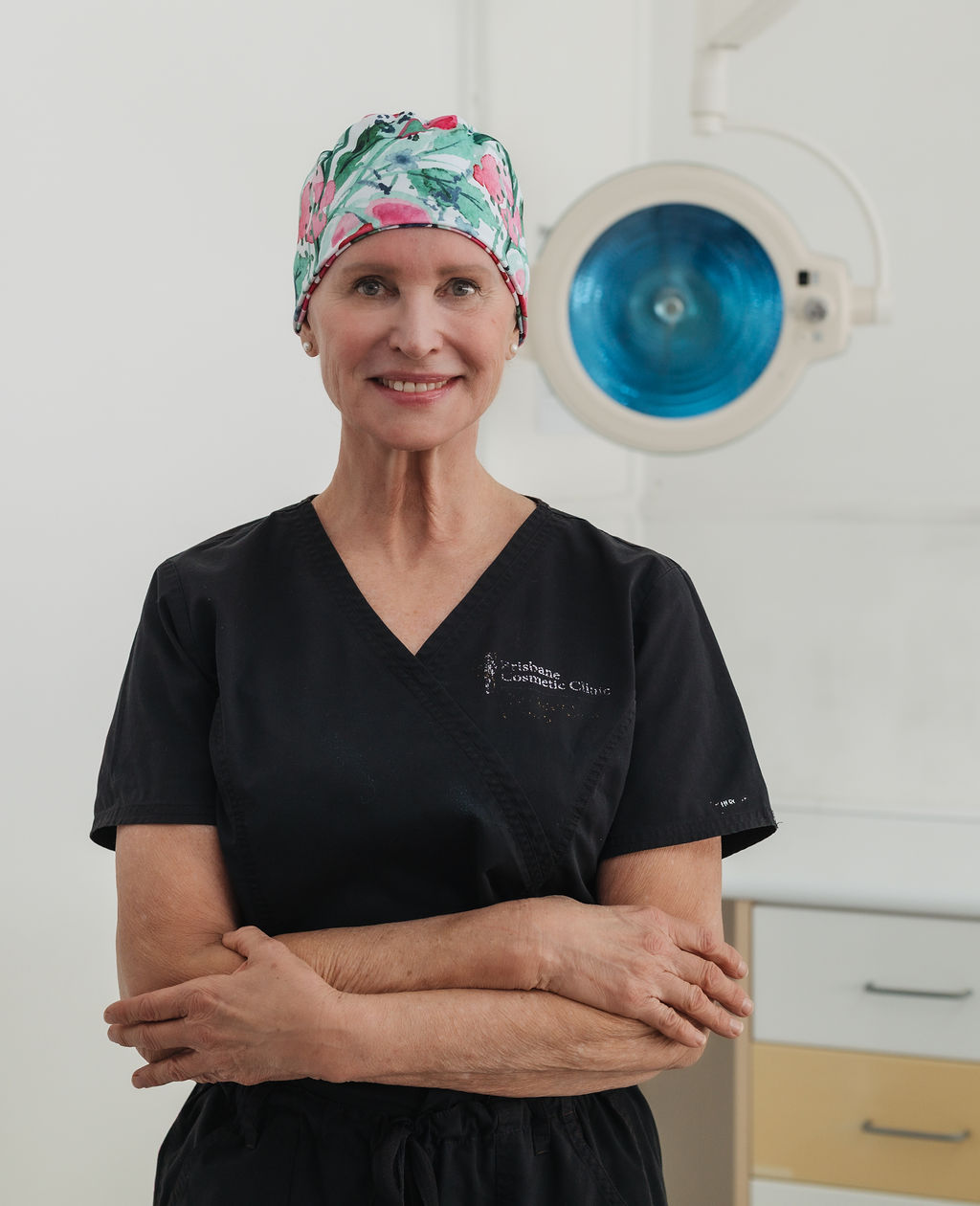
"The question I am asked most is whether it is too early or too late, and the honest answer is that the window is wide and the door does not close. What I am really assessing is the cartilage, with age as a proxy for it. The one thing I look for at every age is whether the patient is the one asking. A child who has raised it themselves, or an adult who has thought about it for years, is a very different conversation from someone whose motivation is coming from a parent or a partner." — Dr Georgina Konrat (MBBS, FACCSM)
Risks and considerations
Otoplasty is a surgical procedure with risks at every age, including hematoma, infection, scarring, sensation changes, asymmetry, partial relapse, and the possibility of revision. Risk profiles shift slightly across age groups but the operation is not categorically safer or riskier at any particular stage. Individual results vary. A specific discussion of risks against your or your child's anatomy belongs in the first consultation.
A note on Medicare and private health insurance
Cosmetic procedures performed at Dr Konrat's practice are private. Medicare rebates and private health insurance generally do not apply. MBS item 45659 can apply for paediatric otoplasty in some circumstances through a different practitioner pathway — the GP is the right starting conversation if rebate eligibility matters.
This article is for educational purposes only and does not constitute medical advice. Otoplasty is a surgical procedure with risks. Individual experiences vary. Dr Georgina Konrat — MBBS, FACCSM, AHPRA Registration MED0001407863. General Registration.