Most adults considering otoplasty have thought about it for years
Adult patients who book otoplasty consultations often share a similar story. The procedure has been on their mind for many years — sometimes since childhood. The decision to go ahead is rarely impulsive. By the time someone walks in for the first consultation, they have usually done significant research, looked at photographs, and decided that this is the year.
That long lead-time matters for two reasons. First, it means the conversation at consultation is often quite specific — patients arrive with clear questions about technique, scar position, and recovery. Second, it means the disappointment of an unsuitable result would carry more weight than for someone who has only recently considered the procedure. Realistic expectations and a clear understanding of what otoplasty can and cannot change are part of every consent discussion. For a broader look at the adult pathway in Sydney, see otoplasty for adults in Sydney.
Why adult cartilage requires different planning
The defining anatomical difference between paediatric and adult otoplasty is cartilage firmness. In childhood, ear cartilage is pliable. The structures that hold the ear in its position relative to the head can be reshaped with relatively low force, and the result generally holds because the cartilage continues to mature in its new position.
In adulthood, the cartilage has reached its final firmness. Reshaping is still possible, but the techniques involved often need to do more work. Sutures may need to hold against more cartilage memory. In some cases, the anterior surface of the cartilage is weakened deliberately (the Stenstrom technique) to reduce the tension on the sutures and lower the risk of suture extrusion or recurrence over time.
The surgical plan in an adult almost always involves a combination of techniques rather than a single approach:
- Mustarde sutures to recreate or reinforce the antihelical fold
- Furnas sutures to set back the conchal bowl where conchal hypertrophy contributes to prominence
- Stenstrom scoring to reduce cartilage memory and reduce suture tension
The exact combination is decided at consultation after assessing which anatomical element is creating the prominence. In adults, both the antihelical fold and the conchal bowl are often involved.
What the first consultation covers
The first of the two required consultations focuses on:
- Assessing the ear anatomy — the position of the antihelical fold, the depth of the conchal bowl, the lobe position, symmetry between left and right ears
- Discussing anaesthesia — adults can have otoplasty under local anaesthesia with sedation or under general anaesthesia. The choice depends on the case and the patient's preference, and is discussed at consultation
- The recovery conversation — the bulky head bandage for the first week, the lighter headband for several weeks afterwards, time off work, sleep position, when normal activities can resume
- Risks — bleeding, infection, asymmetry, sutures breaking, partial recurrence, scarring, the possibility of revision surgery
- The fee estimate — discussed openly so patients know the total before deciding to proceed
The second consultation is a confirmation conversation after the patient has had time to reflect, review the information, and ask any further questions. The seven-day cooling-off period applies between the second consultation and the booking.
What recovery looks like in adults
The recovery from adult otoplasty follows a fairly predictable pattern:
Day 1–2: Bulky head bandage in place. Mild discomfort managed with prescribed pain relief. Rest, with the head elevated where possible.
Week 1: Bandage removal at around day seven. The lighter headband replaces the bulky bandage and is worn day and night for the next few weeks.
Week 1–2: Most patients return to office-based work after about a week. Driving is usually appropriate once the bulky bandage is off and the patient feels alert. Strenuous exercise, swimming, and contact sports are avoided.
Week 2–4: The lighter headband is worn at night. Daytime use can usually be discontinued at the practitioner's direction during the follow-up appointment.
Week 4–6: Strenuous exercise, swimming, and contact sports usually resume after three to four weeks, as advised at follow-up.
Adults often need slightly longer planning than children for time off work — the bulky bandage is visible and many patients prefer to take the first week away from public-facing roles.
The questions that come up most often at adult consultations
Three questions account for the majority of conversations at adult otoplasty consultations:
"Will it look natural?" Otoplasty alters the position of the ear so that it sits closer to the head, with the natural folds of the antihelix restored or reinforced. The ear is not removed or replaced; its existing structure is repositioned. Most patients describe the result as their own ear, in a different position. No outcome can be guaranteed and individual results vary.
"How visible will the scar be?" The incision is placed in the crease behind the ear. Once healed, the scar is generally well concealed. Scar appearance depends on individual healing and genetics.
"Will it affect my hearing?" No. Otoplasty involves the outer ear only. The structures responsible for hearing (the middle and inner ear) are not part of the operation.
Medicare and private health insurance
Medicare rebates and private health insurance rebates do not apply to procedures performed at Dr Konrat's practice. Adult otoplasty is classified as a cosmetic procedure and no rebate is available.
Patients researching Medicare item 45659 should note that this item is specifically for paediatric patients (under 18) with prominent ears, claimed through a Medicare-billing practitioner pathway that is separate from this practice. The item is not relevant to adult cosmetic otoplasty under any pathway.
A personalised fee estimate is provided at the first consultation. Fees cover the practitioner fee, anaesthesia, and facility costs.
Key facts at a glance
- Anaesthesia: local, or general in some cases
- Procedure time: approximately 1 to 2 hours
- Recovery: headband worn continuously for about a week; most desk-based patients back at work within a week; sport avoided for around three to six weeks
- Who it suits: healthy adults with prominent or protruding ears who do not smoke
- Rebates: no Medicare or private health insurance rebate at this practice
Notes from Practice
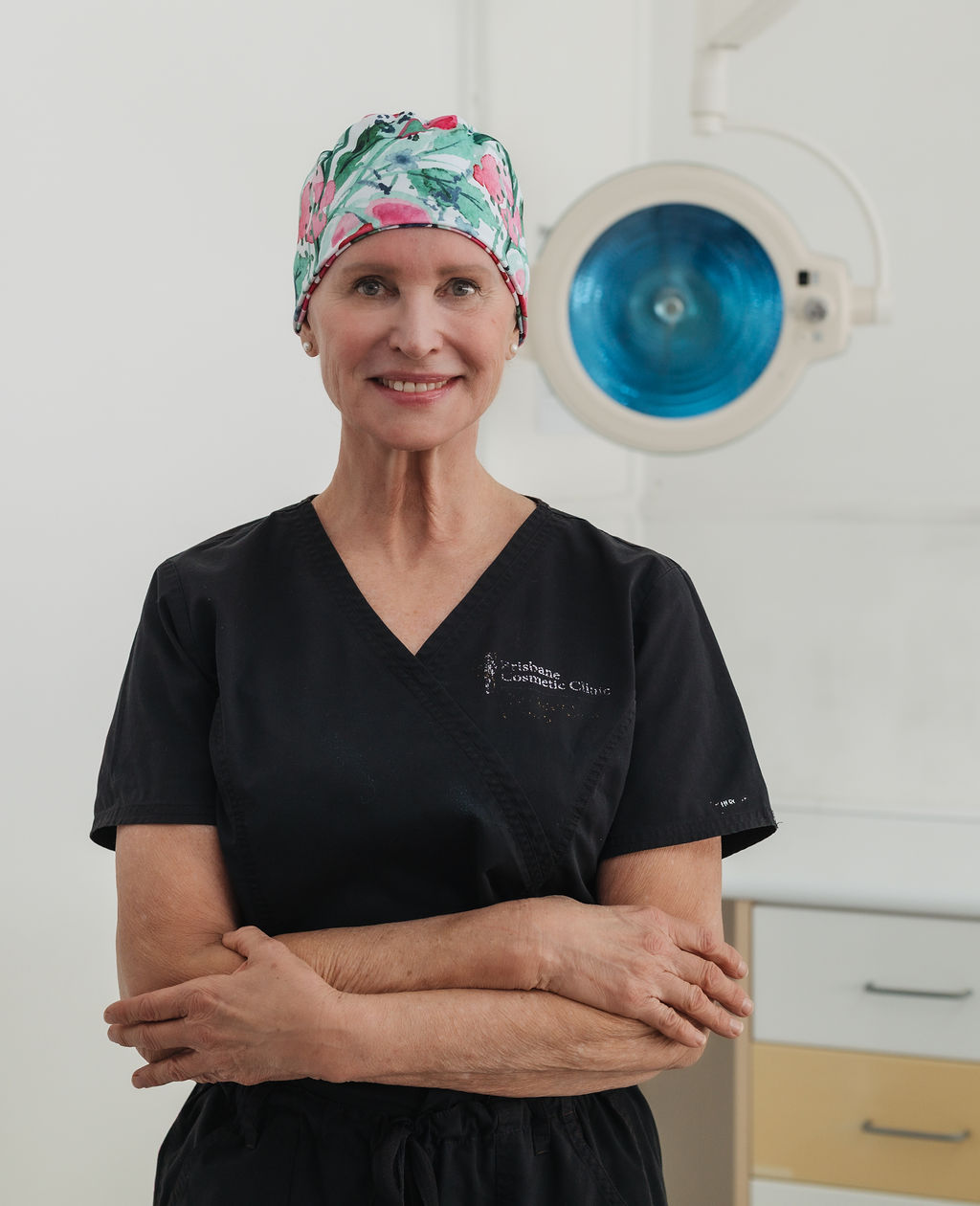
"In our practice, most adults who come in for otoplasty have thought about it for years rather than weeks, and the most common question is not about the surgery itself but about how visible the recovery will be at work. I talk through the headband and the first week honestly, because that is the part people underestimate. On the technique side, adult cartilage is firmer than a child's, so I plan for that at consultation rather than assuming the paediatric approach will transfer." — Dr Georgina Konrat (MBBS, FACCSM)
When to consider booking
For adults who have been weighing otoplasty for several years, the consultation is usually the right next step. A GP referral is required before the first appointment. The two-consultation rule and the seven-day cooling-off period apply.
If you are researching the procedure in Sydney, the otoplasty practice page covers the surgical techniques in more detail, including the named approaches mentioned in this article.