A common misconception
Patients researching upper eyelid surgery often come across both "blepharoplasty" and "Asian blepharoplasty" and assume they describe the same operation with different marketing terminology. They do not. The two procedures address overlapping concerns, but the underlying anatomy is different, the surgical plan is different, and the conversation at consultation is different.
This is a plain-English explanation of what changes between the two operations and why a patient considering either should understand the distinction before booking.
What standard upper blepharoplasty does
A standard upper blepharoplasty removes excess upper-eyelid skin, and where indicated a small strip of orbicularis muscle or a controlled amount of orbital fat. The incision is placed inside the existing supratarsal crease — the natural fold that forms when the levator palpebrae superioris (the muscle that lifts the eyelid) contracts.
In patients with a well-formed supratarsal crease, the scar typically becomes inconspicuous as it settles into the fold. The operation tightens redundant skin and, in many cases, redefines a hooded upper-lid appearance that has developed over time.
The procedure does not lift the brow, change the eye colour, smooth crow's feet, or address dark circles under the lower lid. Those are caused by other tissues that sit outside the upper eyelid. A standard upper blepharoplasty addresses the upper-lid skin and, where appropriate, the structures immediately beneath it.
What Asian blepharoplasty does
The defining anatomical feature of an East Asian eyelid is the relationship between the levator aponeurosis (the tendon-like attachment of the lid-lifting muscle) and the skin of the upper lid. In Caucasian anatomy, fibres of the levator aponeurosis insert into the skin near the lid margin, creating a well-defined supratarsal crease and an exposed pretarsal platform — the visible band of skin above the lash line when the eye is open.
In approximately half of patients of East Asian descent, the levator aponeurosis does not insert into the skin in the same way. The supratarsal crease may be absent, partial, asymmetric, or sit lower than the patient prefers. Asian blepharoplasty addresses this by creating or modifying the connection between the levator aponeurosis and the skin, producing a defined crease at the height planned at consultation.
The operation is performed through an incision in approximately the same location as a standard upper blepharoplasty, but the surgical intent is different. The skin is not the primary target. The relationship between the deeper structures is.
Why the distinction matters at consultation
When a patient comes in for an upper-eyelid consultation, the first question is what they are actually asking for. Some patients describe a tired or hooded appearance and want excess skin addressed. Others describe a wish for a more defined upper-lid crease that they have either lost (after years of skin laxity) or never had (because of underlying anatomy). The answer determines the operation.
In clinical practice, a small subset of patients benefit from both — addressing excess skin in the same operation as redefining the crease. That conversation happens in detail at the first of the two required consultations.
The pre-operative examination focuses on the position of the existing crease (if any), the height of any partial crease, the symmetry between left and right sides, the presence of pretarsal fullness, and the function of the levator. These findings determine which operation is planned. A patient who arrives expecting a standard upper blepharoplasty may, after examination, be a better candidate for an Asian blepharoplasty technique. The reverse is also true.
What the recovery looks like
Recovery timelines for both operations are broadly similar:
- Bruising and swelling around the eyes for one to two weeks
- Stitches removed at around day seven to nine
- Most patients return to office-based work after one to two weeks
- Bruising fully resolves over two to four weeks
- Scar maturation continues over several months
Asian blepharoplasty patients sometimes notice the crease sits slightly higher than the eventual settled position during the first month. This is expected. The crease softens and settles as swelling resolves, and the final result is assessed at eight to twelve weeks. Both procedures carry similar risks — dry eye, asymmetry, scarring, infection, lagophthalmos (incomplete eyelid closure), and the possibility of revision surgery if the result is not as planned.
Costs and Medicare
Medicare rebates and private health insurance rebates do not apply to procedures performed at Dr Konrat's practice. Both standard upper blepharoplasty and Asian blepharoplasty are classified as cosmetic procedures at this practice and no rebate is available, regardless of which operation is appropriate.
A personalised fee estimate is provided at the first consultation. Fees include the practitioner fee, anaesthesia, and facility costs, and are discussed openly at consultation so there are no surprises.
The framework that applies to both
In Australia, both procedures are governed by AHPRA cosmetic-procedure rules:
- A GP referral is required before the first consultation
- Two consultations are required before surgery, with at least one in person
- A seven-day cooling-off period applies after the second consultation
- Patients are encouraged to seek a second opinion before proceeding
- Patients must be 18 or over
The framework is the same for both operations. The clinical conversation, the surgical plan, and the recovery considerations differ.
Key facts at a glance
- Anaesthesia: local with sedation, or general, depending on the case
- Procedure time: approximately 1 to 2 hours
- Recovery: bruising and swelling for one to two weeks; stitches out around day seven to nine; most desk-based patients back at work after one to two weeks; the crease settles over eight to twelve weeks
- Who it suits: patients over 18 addressing upper-lid skin excess (standard) or absent, partial, or asymmetric supratarsal crease (Asian blepharoplasty), without significant dry-eye disease
- Rebates: no Medicare or private health insurance rebate at this practice
Notes from Practice
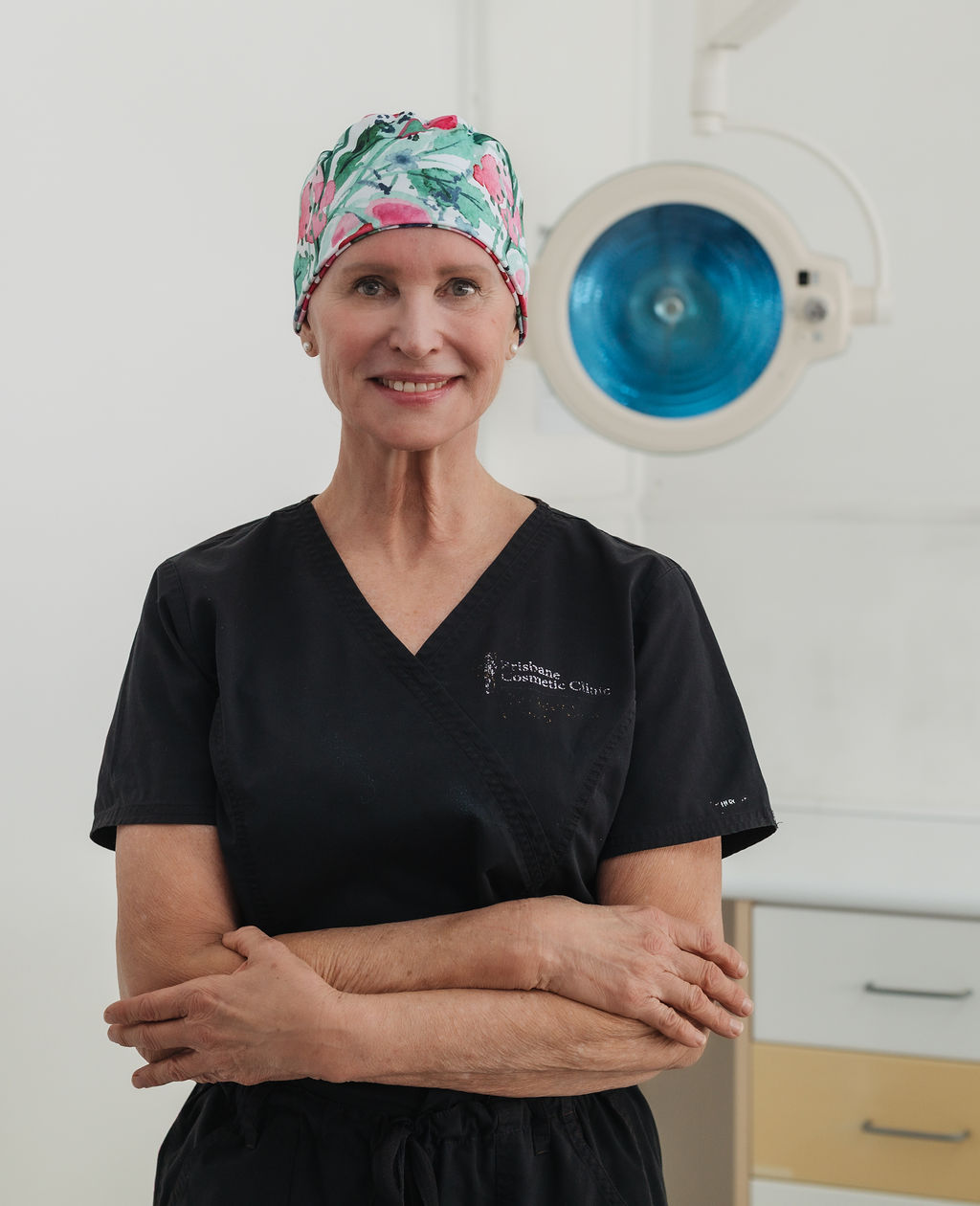
"The first thing I do at an upper-eyelid consultation is work out what the patient is actually asking for, because the same incision line serves two different operations. Some people arrive expecting a standard skin-removal blepharoplasty and, once I examine the crease and the levator, are a better fit for an Asian blepharoplasty technique, and the reverse happens too. I explain that the operation does not change the eye shape, the brow, or the eye colour, because that is a common worry patients raise before I have finished examining them." — Dr Georgina Konrat (MBBS, FACCSM)
When to ask which operation is right
Patients are sometimes uncertain which operation they are a candidate for. That uncertainty is normal — the two operations are visually similar from the outside, and the distinction is not obvious without a clinical examination. The first consultation is where the question is answered. A GP referral, the patient's own description of what they would like to change, and an examination of the eyelid anatomy together produce the surgical plan.
If you are considering either operation in Sydney, the blepharoplasty consultation page explains how the first consultation is structured and what to expect on the day.