
Key Takeaways
- 1Labiaplasty candidacy depends on physical maturity, healing capacity, and personal circumstances — not just appearance.
- 2Ideal candidates are typically over 18, in good health, and have realistic expectations about outcomes and recovery.
- 3Functional concerns like discomfort or interference with daily activities are often stronger motivations than aesthetics alone.
- 4Medical conditions, lifestyle factors (like smoking), and timing in relation to life events can significantly influence candidacy and recovery.
- 5Thorough individual assessment and timing are essential for safe, satisfying surgical results.
Who is a good candidate for labiaplasty involves far more than what meets the eye. Candidacy depends on a fascinating intersection of physical maturity, healing capacity, and life circumstances. Sometimes the ideal candidates are those who've waited, while others who seem ideal on paper might need to pause and reconsider.
The Surprising Truth About Candidacy Criteria
Labiaplasty candidacy involves more than just anatomical considerations — your body's healing capacity plays a crucial role. The ideal candidate needs to be physically mature, over 18 years old, as the body continues developing well into the late teens. Genital development doesn't follow the same timeline as other body systems, and hormonal fluctuations can continue affecting tissue characteristics well into early adulthood.
Physical Health Requirements That Actually Matter
Your overall health status is the next crucial piece. Practitioners evaluate your body's entire healing ecosystem, not just the area of concern. Good general health means your body can mount an effective healing response, manage surgical stress, and recover without complications. Underlying medical conditions that affect circulation, immune function, or wound healing can significantly impact surgical outcomes.
Age and Physical Maturity Considerations
Physical maturity extends beyond what most people consider. While general physical development might seem complete by the late teens, intimate anatomy follows its own developmental timeline. Practitioners typically recommend waiting until at least 18 years of age. Labiaplasty planning benefits from this patience, as mature tissues respond more predictably to surgical intervention.
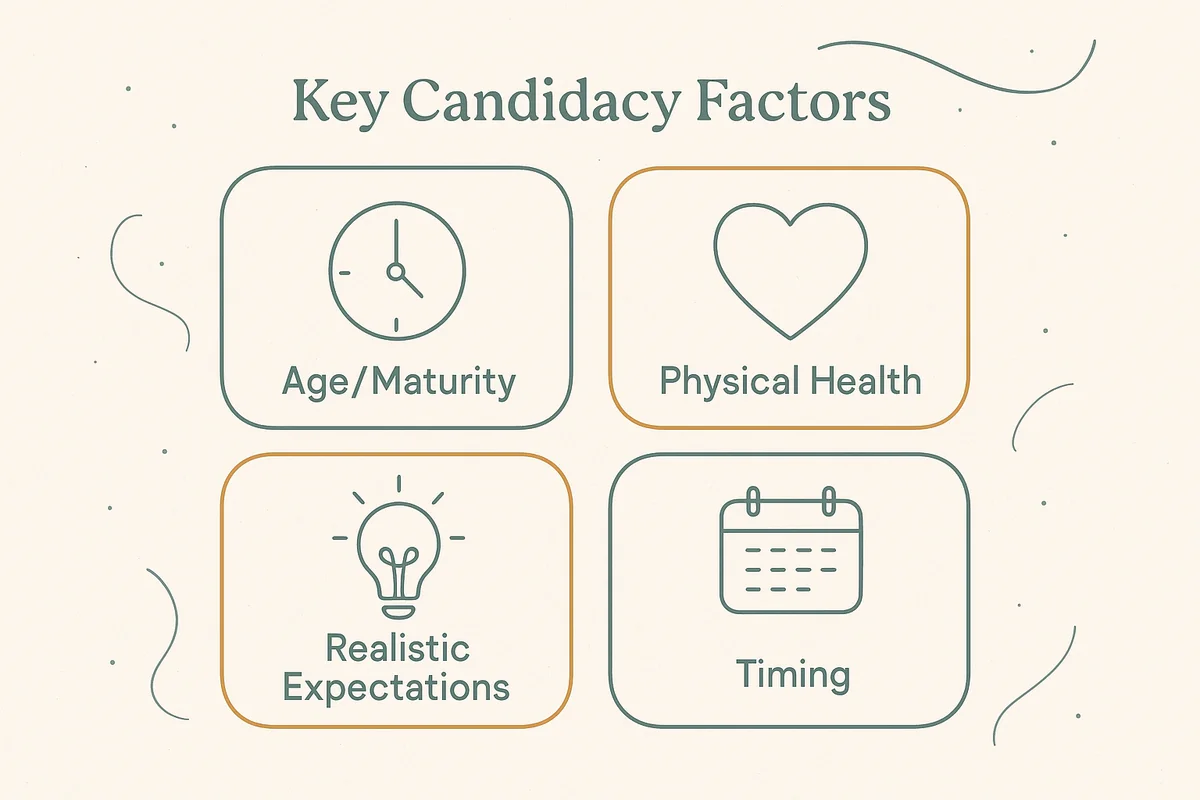
Key factors assessed during consultation. Suitability is determined on an individual basis.
Functional vs Aesthetic Motivations
Functional issues like discomfort during exercise or intimate activities often drive surgical consideration more than aesthetic concerns. When anatomy interferes with normal function, it becomes a medical consideration rather than purely cosmetic.
Understanding why women seek labiaplasty reveals that the good candidates typically have clear functional motivations — discomfort during physical activities, irritation from clothing, or interference with intimate relationships.
Mental Health and Realistic Expectations
Psychological readiness forms as important a part of candidacy as physical suitability. Candidates need realistic expectations about surgical outcomes, understanding that results vary based on individual anatomy and healing patterns. Unrealistic expectations can lead to dissatisfaction even with technically successful procedures. The professional guidelines emphasise thorough consultation processes.
Medical Contraindications and Risk Factors
Certain medical conditions can significantly increase surgical risks or compromise healing. Active infections, bleeding disorders, or conditions affecting immune function require careful evaluation. Conditions like diabetes, autoimmune disorders, or chronic steroid use can all affect healing.
Lifestyle Factors That Influence Candidacy
Smoking affects circulation and wound healing, making it a significant contraindication that requires cessation well before considering surgery. Your body's healing response can also be compromised by poor nutrition, excessive stress, or inadequate sleep during recovery.
Understanding the recovery process helps candidates prepare their lifestyle for optimal healing.
Timing Considerations and Life Circumstances
Timing affects more than just scheduling. Major life stressors, recent pregnancies, or planned future pregnancies can influence both candidacy and optimal timing. Hormonal fluctuations during pregnancy and breastfeeding can affect tissue characteristics and healing responses.
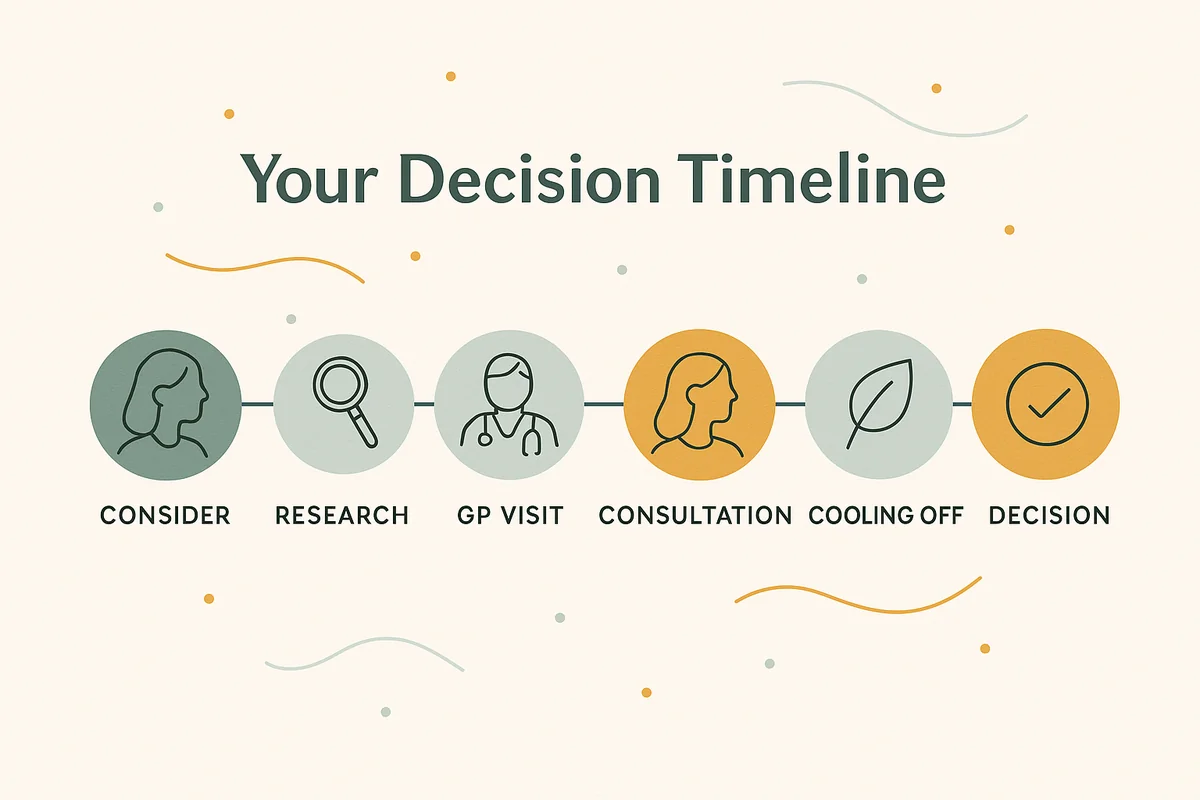
A general overview of the decision process. Take as much time as you need.
Financial and Practical Readiness
Practical considerations form an essential part of candidacy assessment. Beyond the financial investment, candidates need to consider time off work, childcare arrangements, and support systems during recovery. Understanding potential risks and complications helps candidates prepare practically.
When to Wait or Seek Alternative Solutions
Some concerns resolve with non-surgical approaches or may ease with time and life changes. Active gynaecological conditions, recent childbirth, or plans for future pregnancies often warrant delaying surgical consideration.
Making an Informed Decision About Candidacy
Understanding candidacy extends beyond meeting basic requirements. Your body's healing capacity, life circumstances, and realistic expectations all contribute to surgical success.
If you're considering whether labiaplasty might be right for you, contact us to discuss your individual circumstances.
Frequently Asked Questions
What age do I need to be to consider labiaplasty?
Most practitioners recommend waiting until 18 years of age to ensure complete physical development. Genital development continues well into your twenties, influenced by hormonal changes that affect tissue characteristics.
Can I have labiaplasty if I'm planning to have children in the future?
Pregnancy and childbirth can affect intimate anatomy, potentially altering surgical results. Most practitioners recommend completing your family planning before considering labiaplasty.
What medical conditions might prevent me from being a good candidate?
Conditions affecting circulation, immune function, or wound healing require careful evaluation. Active infections, bleeding disorders, diabetes, autoimmune conditions, or chronic steroid use all need assessment.
How do I know if my concerns are functional rather than just aesthetic?
Functional issues often drive surgical consideration more than aesthetic concerns. If you experience discomfort during exercise, irritation from clothing, or interference with intimate activities, these represent functional motivations. Why women seek labiaplasty reveals that good candidates typically have clear functional concerns.
What lifestyle changes do I need to make before surgery?
Smoking requires cessation well before surgery. Your body's healing response depends on good nutrition, adequate sleep, and stress management. Understanding the recovery requirements helps you prepare.