


Key Takeaways
- 1Both gynaecologists and cosmetic doctors can perform labiaplasty in Australia, but their training and focus differ.
- 2Labiaplasty is considered for both functional and aesthetic reasons; all anatomical variations are normal.
- 3Medicare rarely covers labiaplasty except in cases of congenital anomalies or repair after genital mutilation.
- 4Verifying practitioner credentials through AHPRA is essential for safety and informed decision-making.
- 5Recovery typically takes several weeks, with most discomfort occurring in the first week post-surgery.
Which doctor should I see for labiaplasty in Australia?
When researching labiaplasty, you'll quickly discover different types of doctors perform this procedure, and the choice between them isn't always obvious. Should you see a gynaecologist who understands female anatomy, or a cosmetic practitioner who focuses on aesthetic procedures? This decision often leaves people wondering which path offers the most appropriate care.
This guide covers the key differences between these medical pathways, what labiaplasty assessment involves, and practical considerations like Medicare eligibility and recovery expectations. You'll find clear information about qualifications to look for, questions to ask during consultations, and how the procedure varies depending on whether it's performed for functional or aesthetic reasons.
Understanding these distinctions matters when making informed healthcare decisions. Dr Georgina Konrat's practice in Bondi Junction provides educational resources to help people navigate Australia's healthcare options, emphasising thorough consultation and realistic expectations about any medical procedure.
Your choice comes down to training focus and what matters most for your situation.
Gynaecologists spend years studying reproductive health, pelvic anatomy, and conditions affecting women's bodies. They understand how hormones, infections, and medical conditions interact with intimate anatomy. If you have ongoing pelvic pain, recurring infections, or other gynaecological concerns alongside your labiaplasty interest, this background could prove valuable.
Cosmetic doctors focus intensively on procedural techniques and aesthetic outcomes. They concentrate on optimising their surgical approaches. Their consultations often involve detailed discussion about appearance goals and realistic expectations.
Your GP plays a crucial role here. They know your medical history and can guide this decision through referral discussions. A referral letter is always required and this helps communicate your background to whichever practitioner you choose.
Consider what's driving your interest in labiaplasty. Chafing during exercise? Discomfort when cycling? Wishing to change the appearance? Different practitioners may approach these concerns with varying perspectives.
Your comfort level matters enormously. You'll discuss intimate details and recovery expectations, so feeling heard and understood is essential.
Before booking anywhere, verify credentials through the AHPRA public register. Check registration status, any conditions on practice, and complaints history. This verification protects your safety and ensures you're seeing a properly qualified medical practitioner.
The right choice depends entirely on your situation. How to talk about labiaplasty can help you prepare these conversations with your GP, while understanding who makes a good candidate clarifies the factors that influence suitability.
What is labiaplasty and when might it help?
Labia are the folds of skin around your vaginal opening. The inner lips (labia minora) and outer lips (labia majora) vary dramatically between women, and all variations are completely normal.
Labiaplasty surgically modifies these tissues when they cause genuine problems. The procedure typically addresses length, thickness, or asymmetry that creates functional difficulties.
Why do women consider this procedure? The reasons are as individual as the anatomy itself.
Functional symptoms drive many decisions. Chafing during exercise that stops you from activities you love. Pain when cycling because clothing pinches or pulls. Discomfort during intercourse. Hygiene difficulties that create ongoing irritation. Some women experience recurring infections related to tissue folds.
Others simply wish to alter the appearance. These reasons are equally valid.
Understanding common reasons and misconceptions helps normalise the wide range of motivations women have.
The NHS describes labiaplasty as surgically reshaping the labia, noting that recovery typically takes several weeks with activity restrictions during healing.
Before considering surgery, discuss your symptoms with a doctor. Sometimes discomfort may be addressed with different clothing choices, hygiene adjustments, or treatment of underlying conditions like infections or skin sensitivities.
Distinguishing labiaplasty from other procedures helps clarify exactly what each procedure addresses.
Who can perform labiaplasty under Australian rules?
Any registered medical practitioner can legally perform labiaplasty in Australia. But legal permission and appropriate training are different things.
The Medical Board of Australia requires strict protocols for cosmetic procedures. These include detailed risk discussions, mandatory cooling-off periods for some procedures, and psychological screening when appropriate. The Medical Board guidelines exist to protect your safety and ensure informed decision-making.
Your practitioner must discuss alternatives to surgery honestly. They must explain risks without downplaying them. They must provide written information and allow adequate time for decision-making.
Verify any practitioner's credentials before proceeding. Search their name on the AHPRA public register to check registration status, any conditions on their practice, and whether they've faced disciplinary action.
Australian advertising rules prohibit testimonials, before-and-after photos in advertising, and guarantees about outcomes. If you encounter these promotional tactics, consider them red flags.
How do assessments differ: gynaecologist vs cosmetic doctor?
Your consultation experience varies significantly depending on your practitioner.
Gynaecologists typically start with comprehensive pelvic health evaluation. They'll explore your menstrual history, previous pregnancies, infections, hormonal factors, and ongoing pelvic symptoms. They're trained to spot underlying conditions that might contribute to your symptoms or affect surgical planning.
Cosmetic-focused practitioners usually factor in all of the above and their assessment on your specific concerns about the labia and your goals for surgery. They'll examine the anatomy carefully, discuss what changes are possible, and explore your expectations in detail.
Both approaches should include thorough medical history, examination of the labial anatomy, and honest discussion about risks and alternatives.
Healthdirect's cosmetic surgery guide emphasises checking practitioner qualifications and asking detailed questions about their experience.
Understanding related procedures helps you discuss all relevant options during assessment, while knowing the differences between procedures ensures you're considering the right approach.
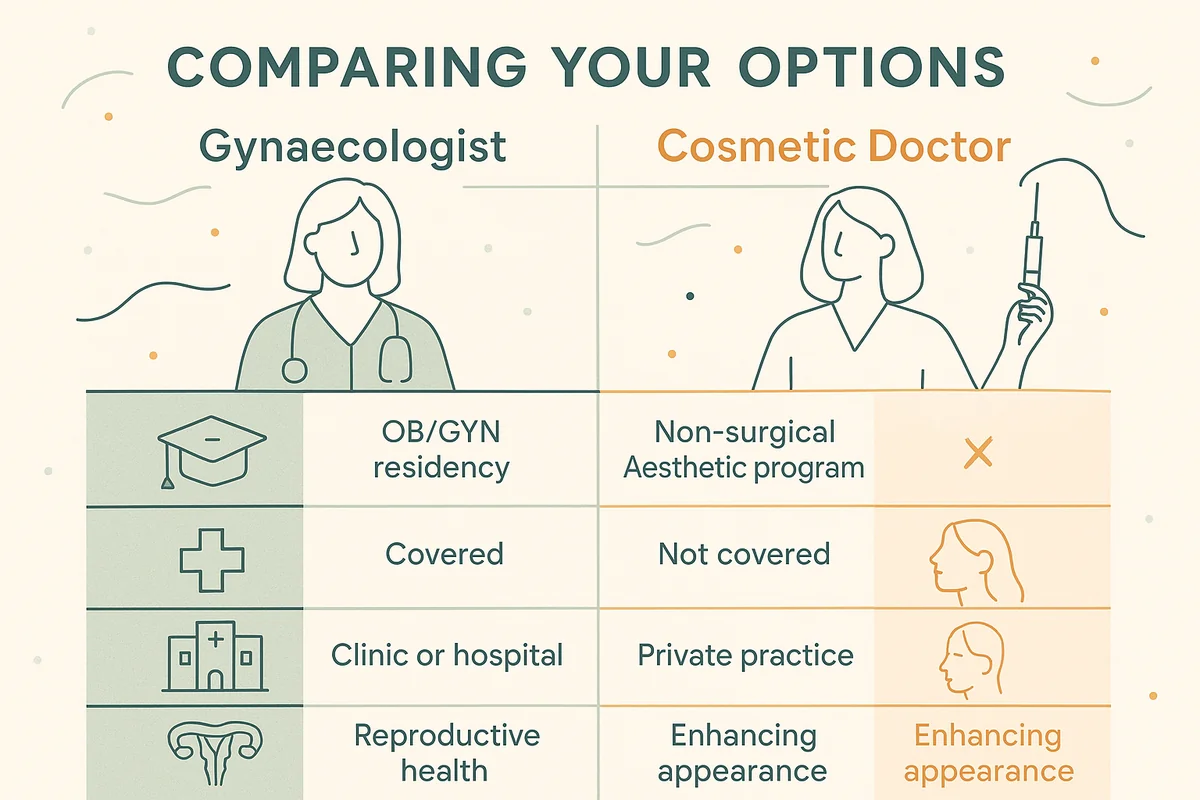
A general comparison. Individual practitioners may vary in their approach and qualifications.
What techniques are used: trim vs wedge, and why?
Two main approaches address labia minora concerns: trim technique and wedge technique. Your anatomy determines which works well.
The trim technique removes tissue along the outer edge of the labia minora. This approach works well when length is the main concern.
The wedge technique removes a V-shaped section from the middle portion of the labia minora, then brings the remaining edges together. This preserves the natural border and pigmentation while reducing both length and width.
Several factors guide technique selection. Tissue thickness and distribution matter. Asymmetry patterns influence the approach, as does the location of any pigmentation changes you want to preserve.
Dr Georgina Konrat developed the DOVE Labiaplasty method, which emphasises tissue preservation, patient safety, and anatomically mindful outcomes.
Cleveland Clinic describes labiaplasty as typically performed under local anaesthetic with sedation, though general anaesthetic is sometimes used depending on complexity and patient preference.
Understanding week-by-week recovery expectations helps you prepare for either approach.
What are the main risks and recovery timeframes?
Every surgery carries risks. Understanding them helps you make informed decisions.
General surgical risks include bleeding, infection, poor wound healing, and anaesthetic complications. Procedure-specific risks include asymmetry, overcorrection, undercorrection, altered sensation, and scarring.
Watch for infection signs: increasing pain, redness, swelling, fever, or unusual discharge. Excessive bleeding, wound separation, or severe pain warrant immediate medical attention.
The first 48 hours bring the most discomfort. Swelling peaks around day 3, then gradually reduces. Ice packs help with swelling, and prescribed pain relief manages discomfort effectively for most people.
Week one requires genuine rest. No exercise, heavy lifting, or straining. Gentle walking is encouraged, but avoid stairs when possible.
Weeks two to four allow gradual activity increases. Light exercise like walking becomes comfortable, but avoid cycling, running, or gym workouts.
The NCBI medical literature notes that complete healing takes several months, with final results becoming apparent around 3-6 months post-surgery.
After 4-6 weeks, most normal activities resume including exercise and sexual activity. However, tissues continue remodelling for months.
How much does labiaplasty cost, and can Medicare help?
Expect to invest $4,000-$8,000 for labiaplasty in Australia. The specific cost depends on what you need.
Your consultation includes a detailed quote based on your specific anatomy and goals. This typically covers practitioner fees, anaesthetist fees if required, facility costs, and follow-up appointments.
Medicare provides very limited coverage for labiaplasty. Medicare item 35533 applies to repair following female genital mutilation or major congenital anomalies. This doesn't cover typical cosmetic or functional concerns that lead most women to consider labiaplasty.
Dr Georgina Konrat is a cosmetic doctor, which means private health insurance rebates and Medicare rebates are not applicable for procedures performed at her practice.
Compare quotes carefully, but remember the cheapest option isn't always the right value. Practitioner experience, facility standards, and aftercare quality matter enormously for your safety and results.
What should I do next to make a safe decision?
Start by preparing specific questions that matter for your safety and satisfaction.
Essential questions include: What are the risks for my anatomy? What alternatives exist to surgery? How many of these procedures do you perform annually? What's your complication rate? What happens if I'm not happy with the result? What does aftercare involve, and who provides it?
Ask about their training background, how long they've been performing labiaplasty, and whether they have hospital privileges. Request to see their AHPRA registration and ask about any additional qualifications.
Red flags include pressure to book immediately, reluctance to discuss risks thoroughly, inability to provide clear aftercare instructions, unclear pricing, or difficulty verifying their credentials.
AHPRA's cosmetic surgery guidance states that taking time to make informed decisions protects your safety and ensures better outcomes.

Always verify your practitioner through the AHPRA register.
If you're considering your options, you can explore detailed information about labiaplasty procedures or learn about what to expect during consultation. When you're ready to discuss your situation, you can contact the practice.
Frequently Asked Questions
Why do people get labiaplasty?
Women consider labiaplasty for both functional and appearance concerns, and both reasons are equally valid. Functional issues include chafing during exercise, discomfort when cycling, pain during intimate activities, or difficulty with hygiene. Understanding common reasons and misconceptions helps normalise the wide range of motivations women have.
Is it normal for labia to extend beyond the outer lips?
Yes, it's completely normal for the inner labia (labia minora) to extend beyond the outer labia (labia majora). Labial anatomy varies dramatically between women, and all variations are normal.
How much does labiaplasty cost in Australia?
Labiaplasty typically costs between $4,000-$8,000 in Australia, depending on the complexity of your case and the practitioner's experience. How to talk about labiaplasty includes practical information about discussing costs during consultation.
How painful is labiaplasty recovery?
Most people experience mild to moderate discomfort rather than severe pain after labiaplasty. The first 48 hours involve the most discomfort, with swelling peaking around day three. Week-by-week recovery expectations provides detailed information about what to expect during each phase of healing.
Should I see a gynaecologist or cosmetic doctor for labiaplasty?
Both gynaecologists and cosmetic doctors can perform labiaplasty, but they bring different perspectives to your care. Your comfort with the practitioner and their approach to your specific concerns matters just as much as their particular training background.
Can Medicare cover labiaplasty in Australia?
Medicare provides very limited coverage for labiaplasty, typically only for repair following female genital mutilation or major congenital abnormalities. Understanding who makes a good candidate includes information about medical versus cosmetic considerations.
How do I find a qualified practitioner for labiaplasty?
Start by verifying any practitioner's credentials through the AHPRA public register. Ask specific questions about their experience with labiaplasty, complication rates, and training background during consultation. Your GP can provide guidance and potentially offer a referral.